introduction: this article focuses on "building a v club hong kong server from scratch to support multi-player connections and management strategies", and provides practical and actionable ideas and key points for operation and maintenance and community administrators. the content takes into account network location selection, basic configuration, multi-person online optimization and management strategies, helping to improve connection quality and maintainability, and is suitable for seo/geo localization optimization.
hong kong has high-quality international bandwidth, low latency that radiates to players in east asia, and a flexible legal environment. as a v club game server node, it can significantly reduce player latency and packet loss. when doing geo positioning and seo, the hong kong node is conducive to covering hong kong, taiwan, japan and southeast asia markets, improving search and connection priority.
select a cpu with peak concurrent processing capabilities and sufficient memory, and configure an ssd to improve read and write response; in terms of network, gigabit or above ports and peer-to-peer direct connections should be prioritized. it is recommended to test bandwidth uplink and downlink, jitter and packet loss, and reserve bandwidth redundancy to ensure that the game experience will not be affected by link bottlenecks when multiple people are online.
at the operating system level, it is recommended to use a stable linux distribution and close unnecessary services to reduce resource usage; download and deploy the corresponding game server image and dependencies according to the official documentation of v. use scripted deployment (such as systemd, docker or automated scripts) to ensure repeatability and rapid recovery, facilitating subsequent expansion and operation and maintenance orchestration.
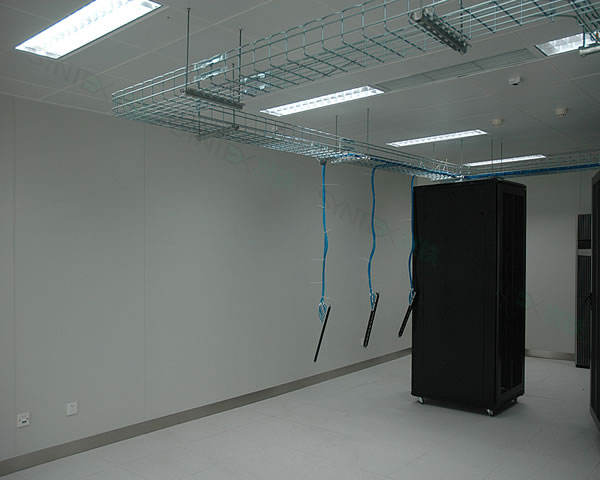
clarify the port range required by the v server and open it on the firewall and router; if deployed in a hosting environment, pay attention to the stability of the public ip and nat mapping. configure minimum privilege rules and logging, and regularly check port openings to avoid security risks caused by accidental openings and ensure the reachability of online ports.
optimization points include adjusting network buffering, tickrate settings and client update frequency; reasonably setting player upper limits and dynamic resource allocation to avoid single server overload. use monitoring data to adjust configuration: dynamically expand or offload capacity based on cpu, bandwidth and latency indicators, and deploy regional load balancing to enhance availability when necessary.
establish a hierarchical authority system to distinguish access control for administrators, moderators and ordinary users, and use logs and audits to record key operations for traceability. develop daily maintenance procedures including patch updates, restart plans and routine inspections, clarify responsible persons and emergency contact information, and improve operation and maintenance efficiency and response speed.
deploy a centralized log and monitoring platform to collect network, system and application layer indicators and configure alarm thresholds; judge trends through charts and historical data. at the same time, regular backups (configurations, maps, archives) are implemented and the recovery process is verified to ensure that services can be quickly rolled back and restored after failures or misoperations.
basic security measures include minimizing open ports, forcing the use of key logins, and restricting management interface access; combining firewalls, connection limits, and rate controls to reduce risks. for ddos, you can use the cleaning service or upstream traffic filtering provided by the hosting provider. at the same time, you can monitor the traffic baseline to quickly identify abnormal requests and trigger protection strategies.
naturally embed regional keywords (such as "hong kong server" and "multiplayer online") in site and service descriptions, and use localized dns and reverse resolution to improve regional matching. provide clear node information and latency measurement when publishing to the community and platform to increase local user trust, while regularly updating content to maintain search engine visibility.
when operating servers in hong kong or target markets, pay attention to laws and regulations related to data privacy, content management, and intellectual property rights, and reasonably formulate user agreements and content review mechanisms. maintain compliance reviews for third-party plug-ins and modules to avoid infringing or illegal content that may lead to service offline or legal disputes. consult local compliance advisors when necessary.
summary: building a v club hong kong server from scratch to support multi-player connections and management strategies requires taking into account network location, hardware configuration, deployment automation, performance optimization and security management. it is recommended to implement scripted and monitored operation and maintenance, hierarchical permissions and backup mechanisms, optimize local exposure with geo keywords, and gradually improve the operation and maintenance plan iteratively based on monitoring data.
- Latest articles
- Comparing The Advantages And Disadvantages Of Singapore Cloud Server VPS Versus Dedicated Servers Helps You Make A Choice
- Testing The Security And Access Speed Of CN2 VPS Japan In Overseas Deployment
- When Choosing A List Of Hong Kong Server Hosting Providers, Consider Network And Security Capabilities
- Best Practices For Isolation Strategies And Network Security For Taiwan-native IP Virtual Machines In Multi-tenant Environments
- SS Hong Kong CN2 VPS Recommendations: The Best SS Hong Kong CN2 VPS For High-frequency Application Scenarios
- User Experience Optimization: Singapore Server Cloud Server Access Acceleration Combined With CDN Integration Solution
- Enterprise-level Service Evaluation: In-depth Analysis Of Cambodia VPS Stability And Scalability
- Where Can You Find A Variety Of Billing Options For Vietnam Cloud Servers? To Meet Different Budget Needs
- Enterprise Migration Guide VPS Software Vietnam Practical Data Backup And Fault Recovery Manual
- From A Long-term Operational Perspective, The Advantages Of Hong Kong Server Clusters Are Reflected In Maintenance And Upgrades
- Popular tags
-

Tips On Common Pitfalls In Hong Kong Server Hosting Buying Guide Written By Industry Experts
this hong kong server hosting buying guide written by industry experts analyzes common pitfalls and avoidance suggestions, covering key points such as bandwidth, compliance, sla, hardware and operation and maintenance, to help enterprises make wise choices. -

Hong Kong Data Center Gaming Server Selection And High Concurrency Stress Resistance Deployment Practical Guide
A practical guide for server selection and high-concurrency pressure-resistant deployment for Hong Kong data center gambling scenarios, covering compliance points, hardware and network selection, architecture design, caching and asynchronous processing, containerization and monitoring strategies, and more. -

Reasons For Slow Access To Hong Kong Servers By Mainland Users
This article analyzes the reasons why mainland users access Hong Kong servers slowly, explores factors such as network latency and bandwidth limitation, and provides some solutions.